
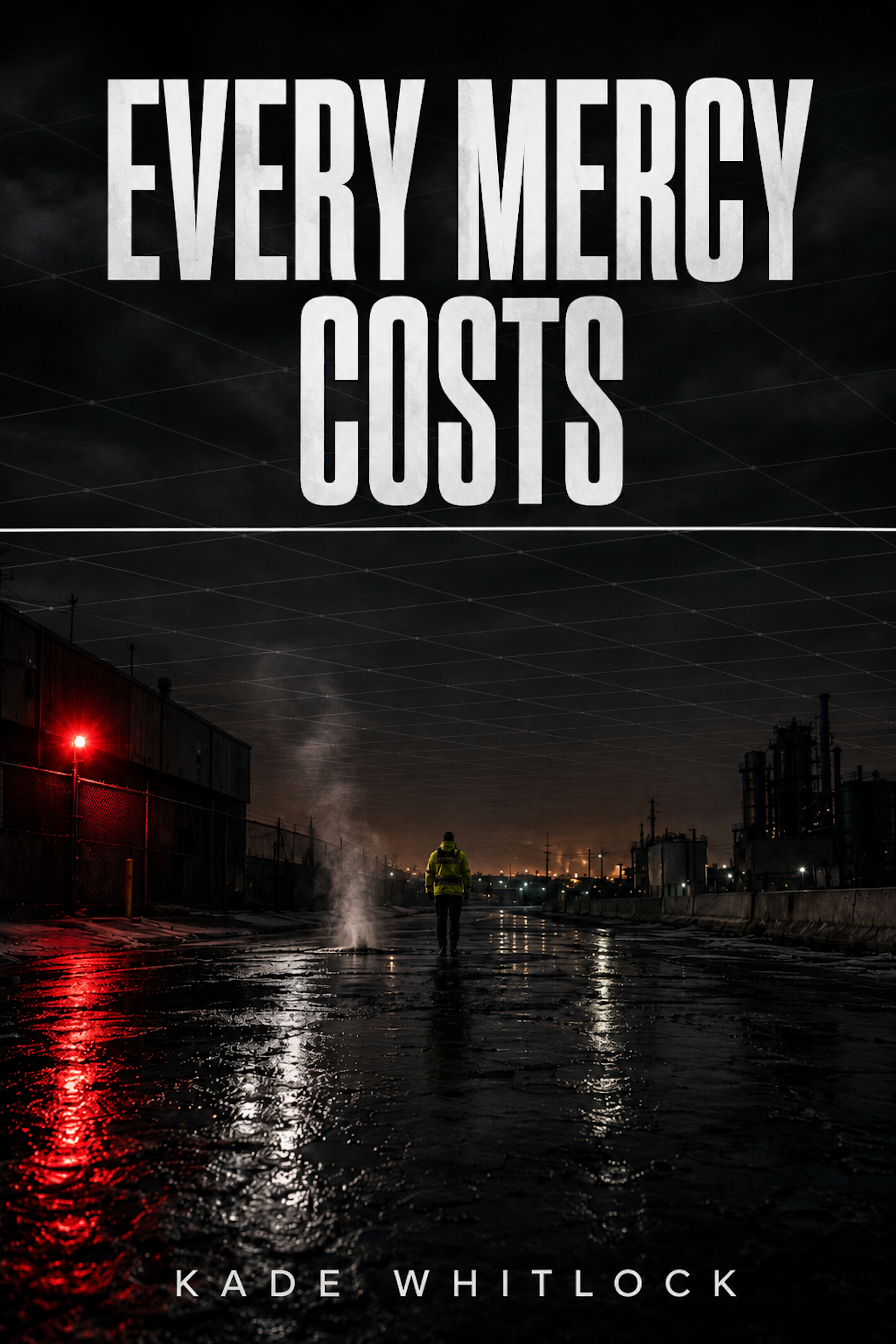
Knowing what happens next is the only advantage Eli Cross has, and the System charges him for every use of it.
Every Mercy Costs opens thirteen months after Earth is absorbed into a progression System, with a Detroit firefighter-paramedic dying certain he knows who to blame. Then he wakes in the back of his own ambulance, twenty-three minutes before Integration, carrying the whole ruined future in his head. He knows which hospitals fall first, which neighbours turn, and the route Jonah Mercer climbed to become First Ascendant by trading millions of low-ranked survivors for protected ground. What he does not know is the rule he had no cause to see the first time: change the future and the System takes an autobiographical memory as collateral. Not his medical training. Not his name. His sister’s face at their father’s funeral, the reason he trusted his partner, a voicemail. He is warned before he pays, and never gets to choose what is taken.
The progression itself is built on dependency instead of loot. This System pays for Leverage — power pulled out of people who trust you, rely on you, or have nowhere else to go. Doctors, parents, protectors, paramedics. For a man who has spent his career on the wrong end of other people’s worst nights, betrayal is the fastest build available, and eleven days is not much time to find a slower one.
Kade Whitlock writes it as competence fiction with the numbers doing real work: five attributes, earned Classes, Nodes and contracts that constrain what a character can choose, and no spreadsheet dumps between fights. Eli is good at triage, bad at firearms, and wholly dependent on an engineer, a lineworker, a physician and a librarian who are better than he is at the things that decide the ending. The antagonist keeps people alive, admits what it costs, and is right about the thing that matters most. Nothing lost is restored, and no final twist undoes the price.
That combination — apocalypse LitRPG built on triage and infrastructure, adult stakes, an argument running underneath the mechanics — is what these 356 pages are for. It is Book One of The Cruelty System and resolves its own story, with no cliffhanger on the main spine. Written for adult readers: graphic violence, mass-casualty medicine in clinical detail, injuries to a child, and strong language.
If that is the trade you want, start the System on day one. Find it on Amazon →


Để lại một bình luận